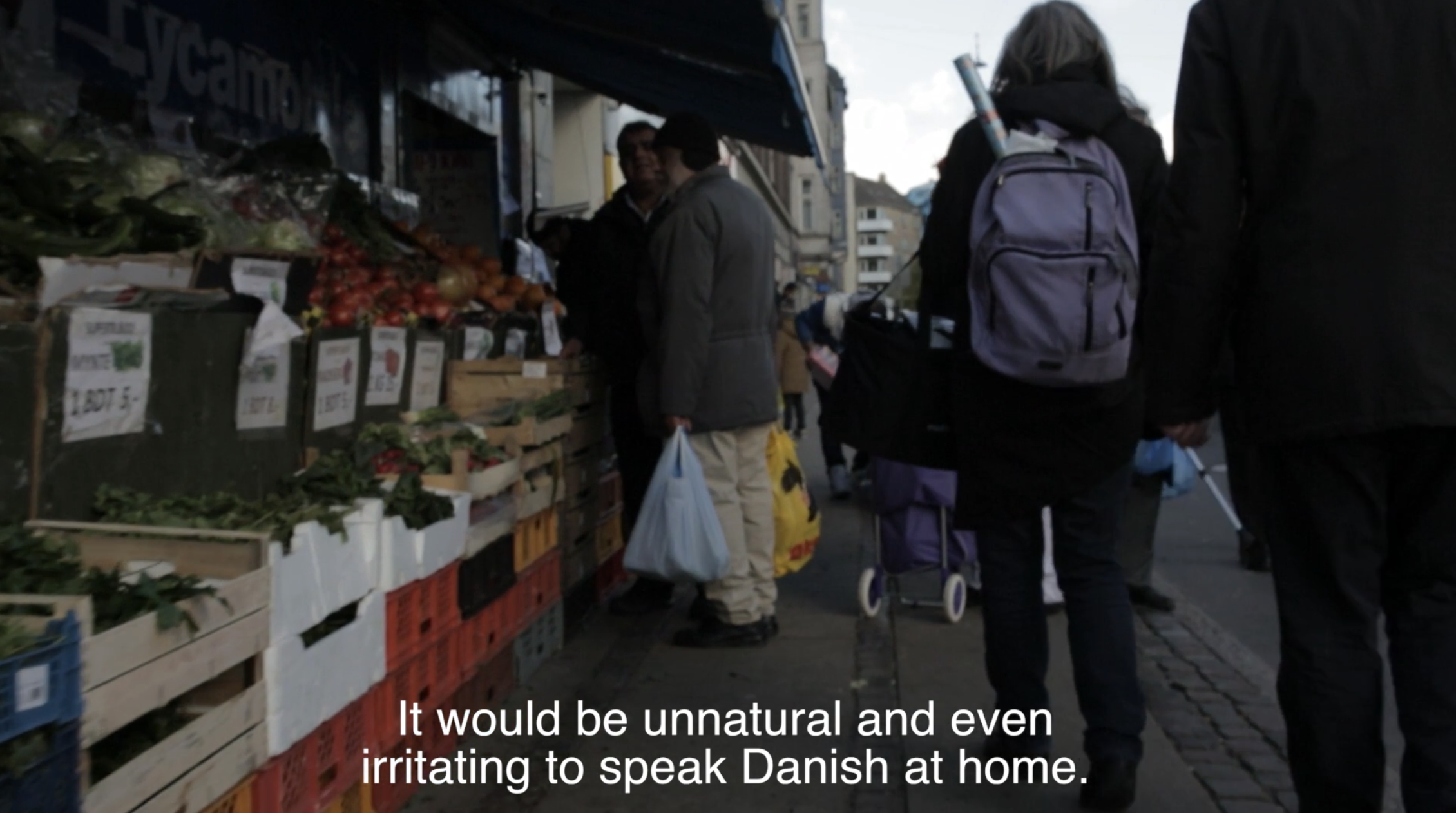
Leap in the Dark was made during pregnancy in 2017, at a time when increasingly harsh political rhetoric around migration and a clear distinction between “us” and “them” were becoming increasingly normalised in Denmark. This rhetoric, which continues to thrive today, forms the political backdrop of the work.
The film explores the existential questions that arise when bringing new life into the world. While the desire to create a family is universal, these questions can carry particular weight for migrants and refugees whose lives have been shaped by displacement, war, and the experience of starting over.
The film takes its point of departure in the seemingly simple choices surrounding the arrival of a child. What should the child be called? A name may appear to be a personal and uncomplicated choice, yet for migrant parents it can become a question of belonging and identity. Will the name help the child fit into its surroundings, or mark them as different? Will it create distance from the parents’ cultural background, or help preserve it?
Beneath these questions lies an experience of how political and social structures can shape people’s possibilities. For those who have experienced being newcomers or outsiders in a society, even the most private choices can become connected to questions of acceptance, discrimination, and survival. A name can influence how a person is perceived whether they gain access to work and communities – and in experiences of war and conflict, a name can ultimately become a matter of life or death.
Visually, the film follows the everyday routes of future parents through Copenhagen’s Nordvest district, an area characterised by cultural diversity and different experiences of migration. Everyday life in the neighbourhood becomes a meeting point between the personal and the political: between the desire to create a safe family life and the social structures that help define who is considered part of the community.
Leap in the Dark explores how migration, identity, and political ideas of belonging enter the most intimate aspects of life: the desire to have a child and the imagining of its future. The work points to how the rhetoric of “us” and “them” does not exist only in public debate but can also shape people’s most intimate choices and hopes for the next generation.